

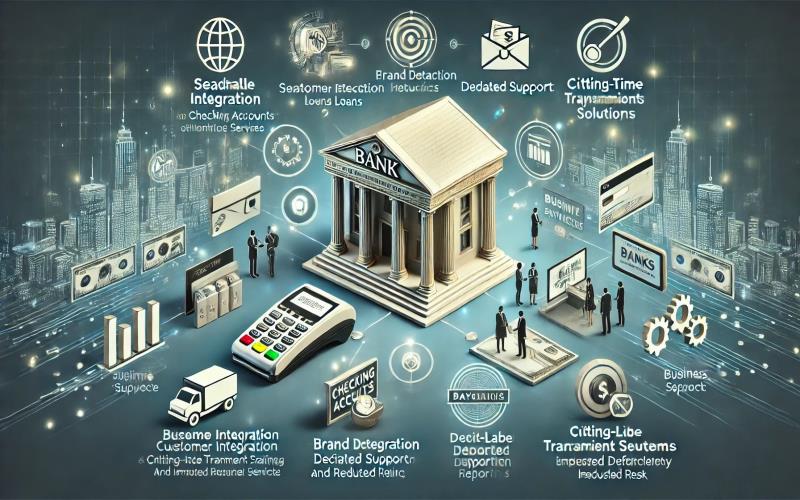
Today, customers, particularly businesses, are demanding a more dynamic and integrated experience. This is where white-label payment solutions enter the game, reshaping the way banks serve their clients. Let’s analyze how white-label payment solutions revolutionize the banks’ operations and revenue.
The essence of white-label merchant services
Picture this: a bank offers a suite of financial products for businesses – checking accounts, loans, etc. Imagine that they can seamlessly add a secure vault to this suite. This vault, built by a specialist, allows businesses to accept payments, verify transactions for fraud, and keep track of everything with clear reports. The best part? The vault is completely branded with the bank’s logo, so it feels like an extension of its existing services. That’s the essence of white-label merchant services. The bank offers a valuable add-on service without having to build the complex infrastructure themselves. This allows banks to offer features like:
- Effortless payment acceptance (credit cards, digital wallets) directly through the bank’s platform.
- Fraud detection and security features protect transactions and customer data.
- Real-time transaction tracking and detailed reports provide valuable insights into cash flow and business performance.
Benefits for banks
Enhanced customer value proposition
By offering merchant services, banks cater to the holistic needs of their business clients, fostering deeper relationships and increasing customer retention.
Cutting-edge payment technologies
Among the innovative technologies white-label merchant management provides are intelligent payment routing and cascading, payment analytics, payment dashboard, and many others.
Increased revenue streams
Merchant services generate recurring fees from transaction processing, creating a new and sustainable revenue stream for banks.
Brand differentiation
Banks leverage white-label merchant services to differentiate themselves from competitors, attracting new business customers seeking a comprehensive financial solution.
Improved operational efficiency
Integrating merchant services with existing banking platforms streamlines onboarding processes and simplifies account management for both banks and their business clients.
Benefits for business clients
Seamless integration
White-label merchant services seamlessly integrate with existing bank accounts, eliminating the need for multiple service providers and simplifying financial management.
Brand consistency
Businesses maintain brand consistency with their existing bank’s logo and user interface, providing a familiar and trustworthy experience for their customers.
Dedicated support
Banks offer dedicated support for their white-label merchant services, ensuring their business clients receive timely and professional assistance.
Reduced risk
Banks are typically established and well-regulated institutions, offering business clients a sense of security when it comes to their financial transactions.
Conclusion
Summing up, white-label payment solutions are more than just a technological innovation – they represent a strategic shift in the way banks operate. White-label merchant services offer a compelling opportunity to expand banks’ product portfolio, strengthen customer relationships, and generate new revenue streams.
However, the success of white-label payment solutions hinges on more than just technology. Banks should adopt a customer-centric approach, prioritizing user experience and fostering strong partnerships with the providers behind the white-label infrastructure. Continuous innovation, coupled with a commitment to data security and regulatory compliance, is essential to building trust and ensuring long-term success. The time for transformation is now, and white-label payment solutions offer a compelling roadmap for banks to navigate the digital frontiers of financial services.
